
Root Canal Harley Street
NEED ROOT CANAL TREATMENT IN LONDON?
At 76 Harley Street, our experienced specialist endodontic team provides expert root canal therapy with precision, care, and your comfort in mind.
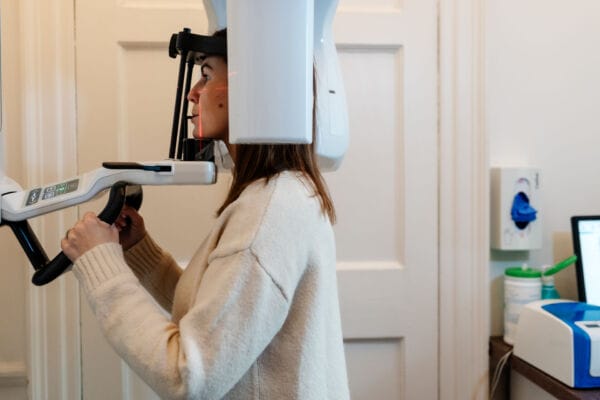
Using the latest techniques and technology, including operating microscopes and CBCT imaging, our endodontic team delivers high-quality treatment to relieve pain, save natural teeth, and restore long-term dental health. You can trust us to provide a calm, reassuring experience with exceptional clinical outcomes.
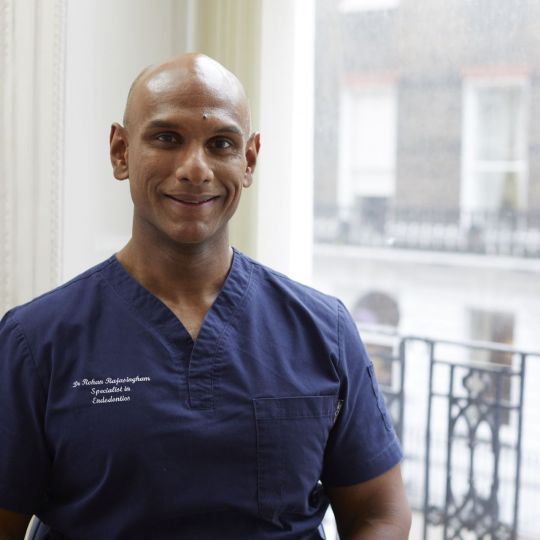
✓ Trusted by thousands – Successful root canal treatments carried out – Specialist Endodontists, Dr Tim Sunnucks & Dr Rohan Rajasingham



-
Root Canal Treatment at 76 Harley Street
-
What is Root Canal?
-
When Might You Need a Root Canal?
-
What is an Endodontist?
Our dedicated team who specialise in Endodontics (root canal treatment), Dr Rohan Rajasingham and Dr Tim Sunnucks offer outstanding, pain-free root canal treatment to save natural teeth. Our specialists are acknowledged for the quality and care of their treatment, alongside their success in saving natural teeth for thousands of patients.
At 76 Harley Street, you can expect comfort, kindness and clear and concise communication when it comes to your treatment. We believe it is important that patients understand why they require root canal treatment, what the procedure will involve and what they can do to ensure the best possible outcome following treatment. An informed patient will always be in the best position to achieve optimum dental health.
Why 76 Harley Street for Root Canal treatment?
Specialist-led care from registered endodontists
Comfort-focused approach in a calming clinical environment
Access to full restorative care, including crowns or onlays following root canal treatment
Tailored treatment plans and transparent explanations every step of the way
Whether you're experiencing symptoms or have been referred by your dentist, you’re in expert hands at 76 Harley Street.
Root canal treatment involves carefully removing the infected or inflamed pulp from inside the tooth, disinfecting the canal system, and sealing it to prevent future infection. This procedure allows the natural tooth to be preserved, avoiding extraction and helping maintain normal function and aesthetics.
Advanced Technology for Accurate Diagnosis
We use state-of-the-art diagnostic and treatment technology, including:
CBCT scanning for 3D imaging and precise treatment planning
Endodontic microscopes to visualise the fine details of the tooth’s internal structure
Vitality testing to assess the health of the tooth pulp
This technology ensures a highly accurate diagnosis and a minimally invasive approach, improving comfort and long-term success.
You may require root canal therapy if you experience:
Persistent tooth pain or sensitivity
Swelling or tenderness in the gums
Discolouration of the tooth
Deep decay or trauma affecting the nerve
Our specialists will assess your symptoms and guide you through every step of your personalised treatment plan.
An endodontist is a specialist dentist who focuses on diagnosing and treating issues related to the inside of the tooth, particularly the dental pulp (the soft tissue containing nerves and blood vessels) and root canals.
What does an endodontist do?
Endodontists are highly trained in performing procedures that involve saving natural teeth, most commonly:
-
Root canal treatment
-
Re-root canal treatment (retreatment of previously treated teeth)
-
Treatment of dental trauma (such as a knocked-out or fractured tooth)
-
Surgical endodontics, like apicoectomy (removing the tip of the tooth root)
They use advanced technology such as:
-
Dental operating microscopes for precision
-
CBCT scans for 3D imaging
-
Ultrasonic instruments for cleaning complex root systems
How is an endodontist different from a general dentist?
While general dentists can perform basic root canals, endodontists undergo an additional 2–3 years of specialist training after dental school. This makes them the go-to experts for complex or high-risk cases, or for patients who need retreatment or specialist-level care.
If you have persistent tooth pain, a history of failed root canal treatment, or complex anatomy in your tooth, your dentist may refer you to an endodontist for specialist care.

Root Canal FAQs
What is Root Canal treatment?
Root canal treatment, also known as Endodontics is a specialist type of dentistry that manages the dental pulp and its supporting structures. An Endodontists aim is to preserve a tooth in function especially when the cost of tooth loss and replacement is much greater.
Before starting treatment, the endodontist will first make sure that you will not feel any pain by using very effective local anaesthetic, then they will very carefully and thoroughly clean the inside of the canals. When they are satisfied that the canals are 100% clean he will fill and seal them. This may be done over one, two or even three visits. Low dose digital x-rays are used as necessary.
When would I need Root Canal treatment?
Deep cavities (caries), cracks or chips can all lead to inflammation or infection of the teeth. Root Canal treatment is necessary when the Pulp becomes inflamed or infected. If the Pulp is left untreated, this can often cause pain or lead to an abscess. You should see your dentist you are in any discomfort with your dental health.
How successful is root canal treatment?
Root canal treatment can have a success rate of 80-95%, provided careful attention to detail has been maintained throughout the process. With the proper restoration of the tooth after treatment and maintenance with good oral hygiene, the tooth can last a lifetime.
Can all teeth be root-treated?
In some cases, alternative options may be more appropriate. For example, if the tooth is cracked below the gum level, if there is severe gum disease or if there is not enough of your tooth left to re-build it after the treatment.
Why may root canal treatment fail?
Persistent infection can result from: missed canals, complex anatomy, blocked canals, narrow and curved canals which have not been adequately cleaned, or due to bacteria on the outer surface of the root of the tooth. In addition, persistent infection or a new infection can occur if the filling or crown on the tooth breaks down, if there is a crack in the tooth, or due to periodontal disease (gum disease).
What is the outcome of Root Canal treatment/prognosis?
What signs and symptoms should I look out for?
- Prolonged sensitivity to hot food or liquids
- Intense pain (ranging from mild to severe) which can worsen as you bite down on the tooth
- Gums feel swollen and tender near the problem area
You may find that you are not suffering with any of the above symptoms and the first sign of a problem maybe radiographic evidence from which your Endodontist or dentist will be able to diagnose.
Why would my dentist refer me to an Endodontist?
Although General Dentists can perform Endodontic treatment, patients are often referred to an Endodontist when the case is complicated or more difficult than usual. At 76 Harley Street, you can be referred to us by your referring dentist or can simply contact us directly should you want to discuss treatment or have a second opinion.